Free insured shipping on orders over $500 · Authenticity guaranteed on every timepiece

Smile & Dial Watch Co.

A Field Guide to What’s Ticking

Inside a Watch

Every mechanical watch is a tiny machine built from a hundred-odd parts that all agree on one thing: what time it is. Scroll through two real timepieces — a Waltham pocket watch and an Omega Speedmaster — as they come apart, piece by piece. Every image below is a real photograph.

Part One

The American Pocket Watch

Our guide is a Waltham — built by the American Waltham Watch Company of Waltham, Massachusetts, the factory that taught the world to mass-produce precision. Scroll on, and it will open up for you.

Engraved pocket watch case back, a 1933 presentation piece
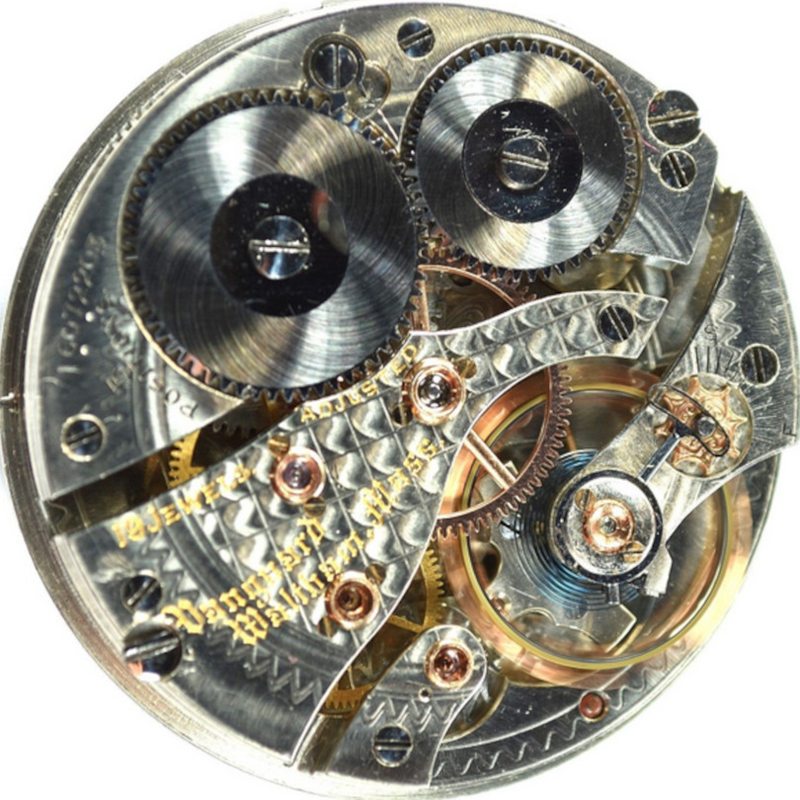
Waltham Vanguard pocket watch movement with damascened plates and gold jewel settings
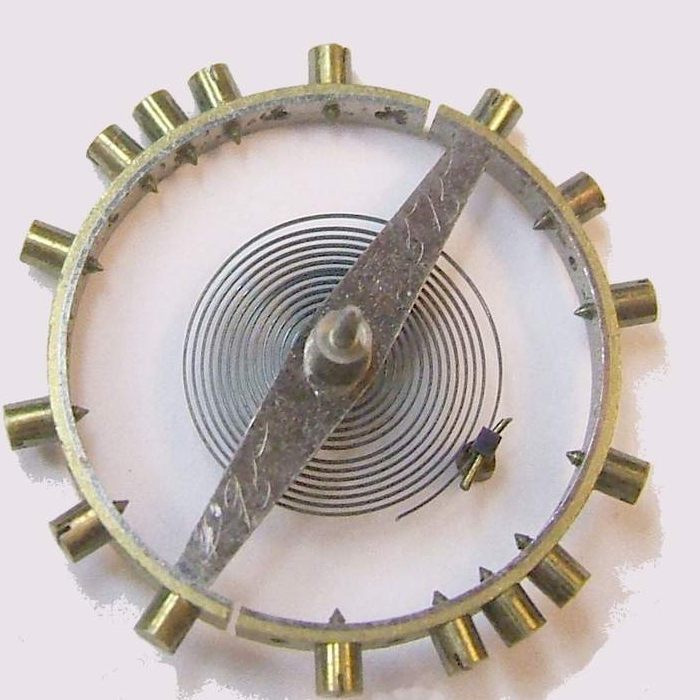
Pocket watch balance wheel with coiled hairspring
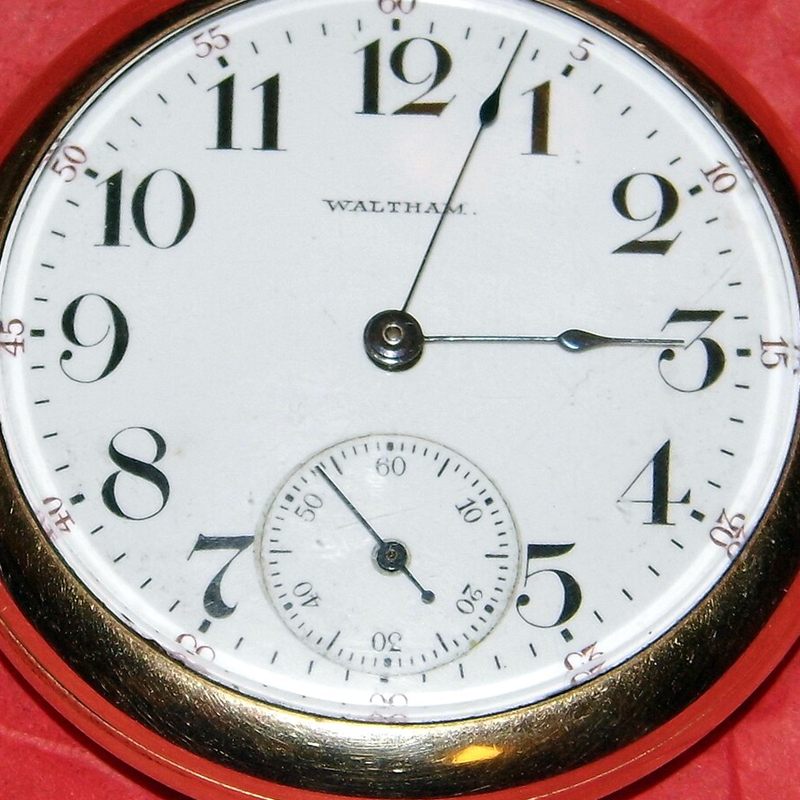
Waltham pocket watch dial with white enamel face and blued-steel hands
01 · The Watch

A Machine You Could Trust Your Train To

Before the wristwatch, the pocket watch was how America kept its appointments — and its railroads safe. The Waltham Watch Company (founded in the 1850s) revolutionized the craft by building watches from interchangeable, machine-made parts, turning out over 35 million timepieces before it closed its doors.

What you see here is a classic open-face Waltham: white enamel dial, gold-filled case, and inside, a movement finished more beautifully than anyone would ever see. Keep scrolling to open it up.

02 · Dial & Hands

The Face That Tells the Story

The dial is fired white enamel — glass fused to metal — which is why century-old Walthams still look crisp today. Bold Arabic numerals and a red outer “five-minute” track made it readable at arm’s length, a requirement for railroad-grade watches.

The small circle above the 6 is the sub-seconds dial. On most pocket watches the seconds hand lives here, on its own axis, driven directly by the fourth wheel of the gear train.

Look closely at the hands: the steel was heat-blued — literally cooked until it turned a deep cornflower blue — both for corrosion resistance and for looks.
03 · The Movement

The Engine Room

Lift off the dial and case and you find the movement — the complete machine that actually keeps time. This one is a Waltham Vanguard, the company’s top railroad grade, from 1907.

The swirling patterns on the plates are called damascening, decoration cut by machine into the nickel. The gold rings are screwed settings holding ruby jewels; the engraved script spells out the grade and jewel count. None of this was ever meant to be seen by the owner — it was pride of workmanship, hidden under a screwed-down cover.

04 · The Mainspring

Where the Power Comes From

A mechanical watch has no battery. Its fuel tank is the mainspring — a long ribbon of hardened steel coiled inside a drum called the barrel. Winding the crown tightens the coil; for the next day or so, it pushes back, and that push is the only power the watch has.

Uncoiled, the spring in a pocket watch stretches roughly half a meter. A full wind on a watch like this runs about 30 hours — which is why the railroads required their men to wind daily, at the start of every shift.

The engineering problem: a freshly wound spring pushes harder than a nearly spent one, yet the watch must not speed up or slow down. Solving that is the job of everything that follows.
05 · The Gear Train

Gearing Down the Push

The barrel turns once every several hours — far too slow and far too strong to run a watch directly. The gear train is a relay of wheels and pinions that steps that motion up: barrel to center wheel (one turn per hour — your minute hand), center to third, third to fourth (one turn per minute — your seconds hand), fourth to the escape wheel.

Each step trades force for speed, like the gears on a bicycle. By the end of the train, the mainspring’s slow shove has become a fast, feather-light spin — ready to be measured.

06 · The Escapement

The Part That Goes Tick

Left alone, the gear train would unwind in seconds. The escapement stops it — literally. A star-shaped escape wheel is caught and released, tooth by tooth, by a tiny lever called the pallet fork, whose two jeweled fingers alternately block and free the wheel.

Each release lets the train advance one tiny, identical step — and each catch is the “tick” you hear. A watch like this ticks five times every second, about 432,000 times a day, for decades.

07 · Balance Wheel & Hairspring

The Beating Heart

But what tells the escapement when to release? The balance wheel — a weighted ring swinging back and forth on the finest of pivots, paired with a spiraled hairspring thinner than a human hair. Together they form a pendulum you can carry in your pocket: the spring’s coil and the wheel’s inertia set a natural rhythm that barely changes whether the mainspring is full or nearly flat.

Every swing of the balance unlocks the escapement exactly once. The watch doesn’t count seconds — it counts swings.

See the little lever marked F and S on the movement? That’s the regulator. Nudging it lengthens or shortens the active hairspring — Faster or Slower — which is how a watchmaker brings a watch to within seconds a day.
08 · The Jewels

Rubies Doing Real Work

Those red dots are actual rubies (synthetic sapphire, since the early 1900s) — not decoration, but bearings. Ruby is one of the hardest materials on earth and, when polished, nearly frictionless. Every fast-moving axle in the watch spins in a jeweled hole; the pallet fork’s fingers and the balance’s impulse point are jeweled too.

That’s what “17 jewels” or “23 jewels” engraved on a movement means: how thoroughly the friction points are protected. More jewels meant a finer grade, longer life, and steadier timekeeping.

09 · The Case

Armor, and a Memory

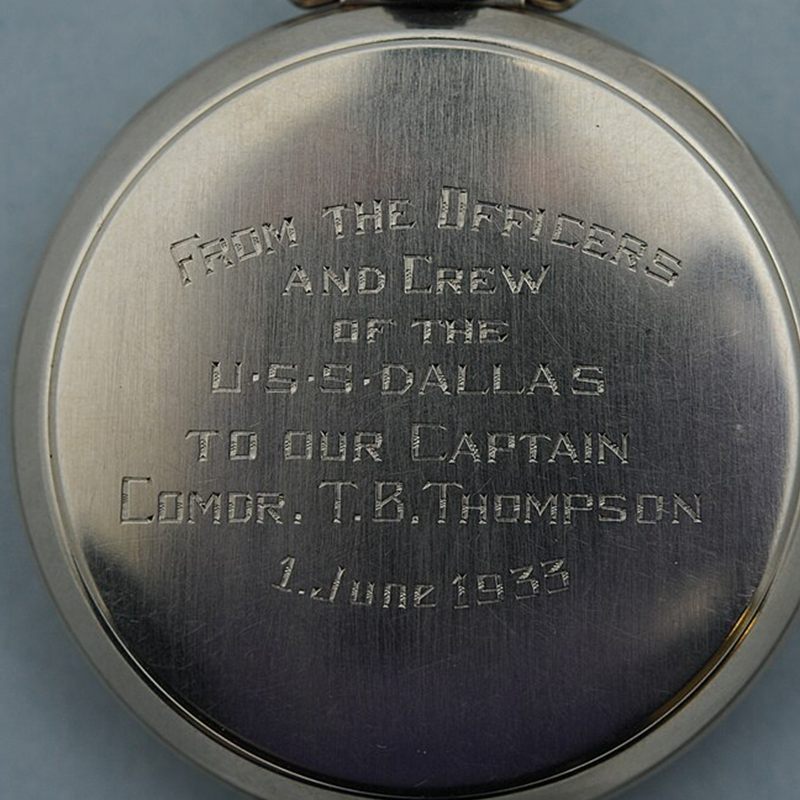
The case seals the machine against dust — the mortal enemy of oiled pivots — and gave the era its love language: engraving. Pocket watches marked retirements, weddings, and rescues; the case back was where the story went.

This one reads: “From the officers and crew of the U.S.S. Dallas to our captain, Comdr. T.B. Thompson — 1 June 1933.” When you handle a vintage pocket watch, you’re holding someone’s proudest day.

Cases came in two great families: the open face (dial always visible, like our Waltham) and the hunter, with a spring-loaded lid that snaps shut over the crystal.

How It All Works Together

MainspringStores your winding as coiled energy
Gear TrainSteps the power up to a fast, light spin
EscapementReleases it one tick at a time
BalanceSets the rhythm, five beats a second
HandsRide the train, telling you the time

Part Two

The Luxury Wristwatch

Same heart, new body. Our second guide is the Omega Speedmaster Professional — the “Moonwatch” — proof that everything the pocket watch invented learned to live on a wrist, survive a rocket launch, and still look this good.

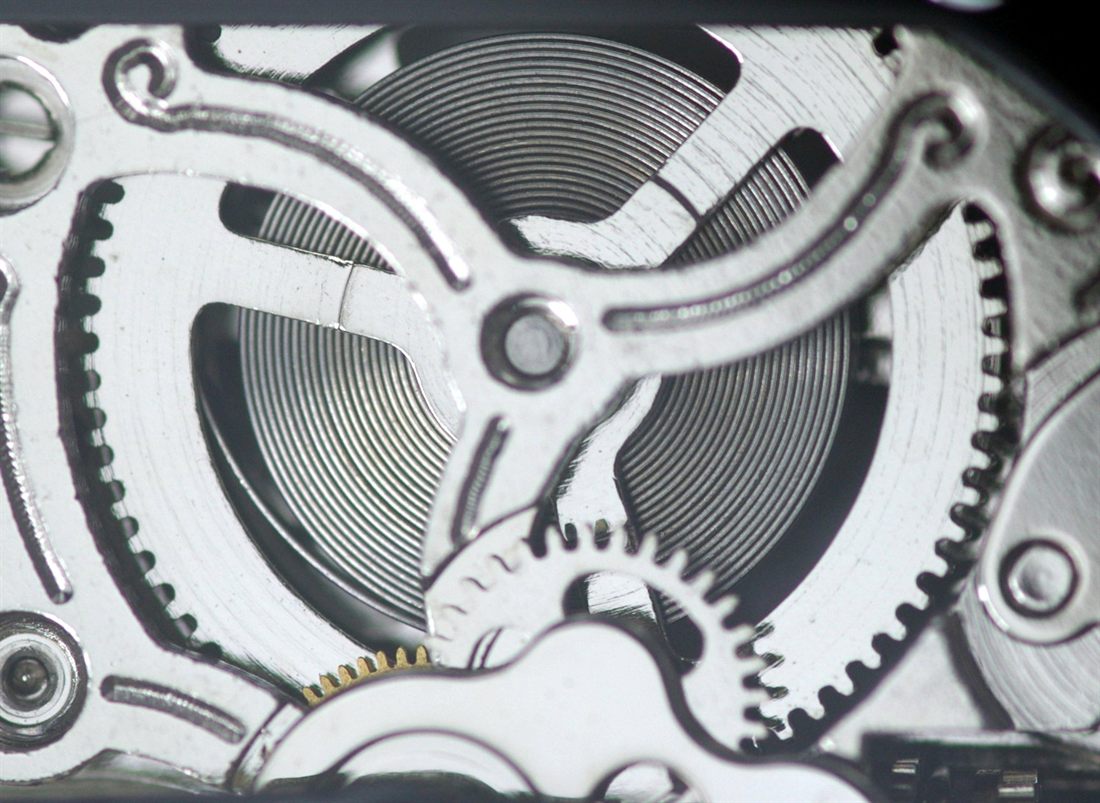
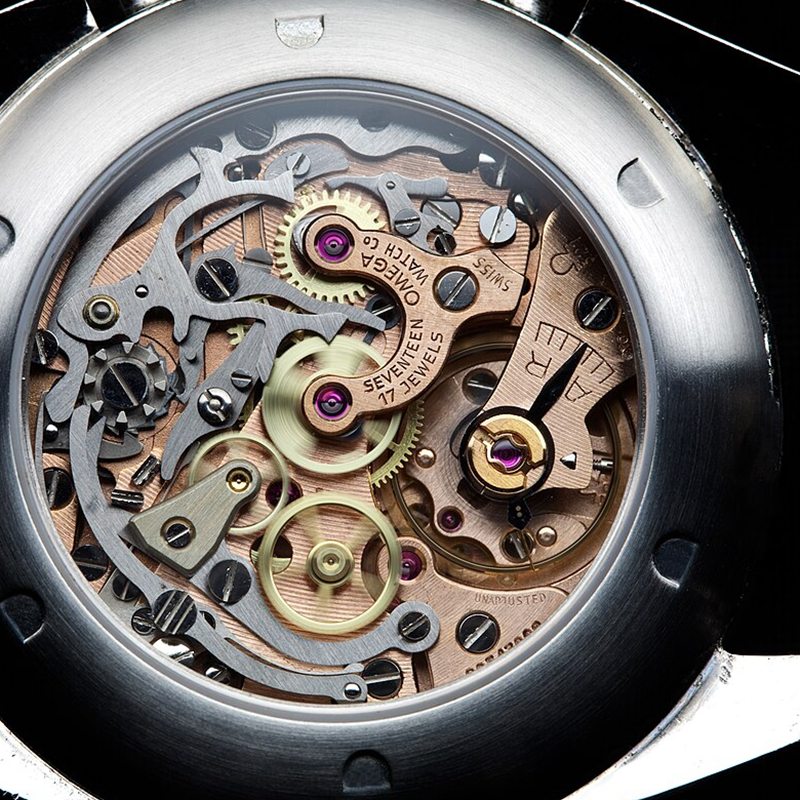
Omega Calibre 321 movement seen inside its steel case
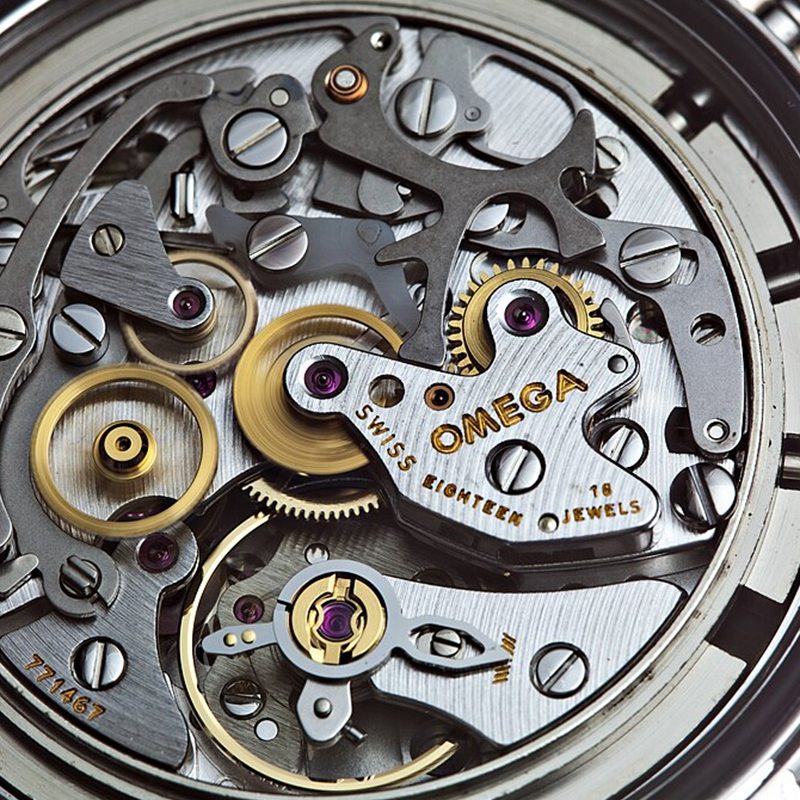
Omega Calibre 1861 chronograph movement, copper-toned with jeweled bearings
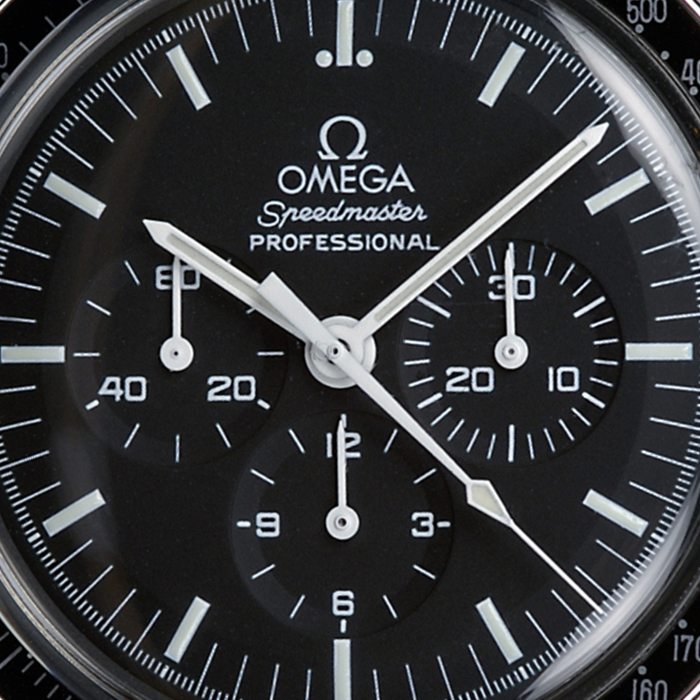
Black dial of an Omega Speedmaster Professional with three subdials
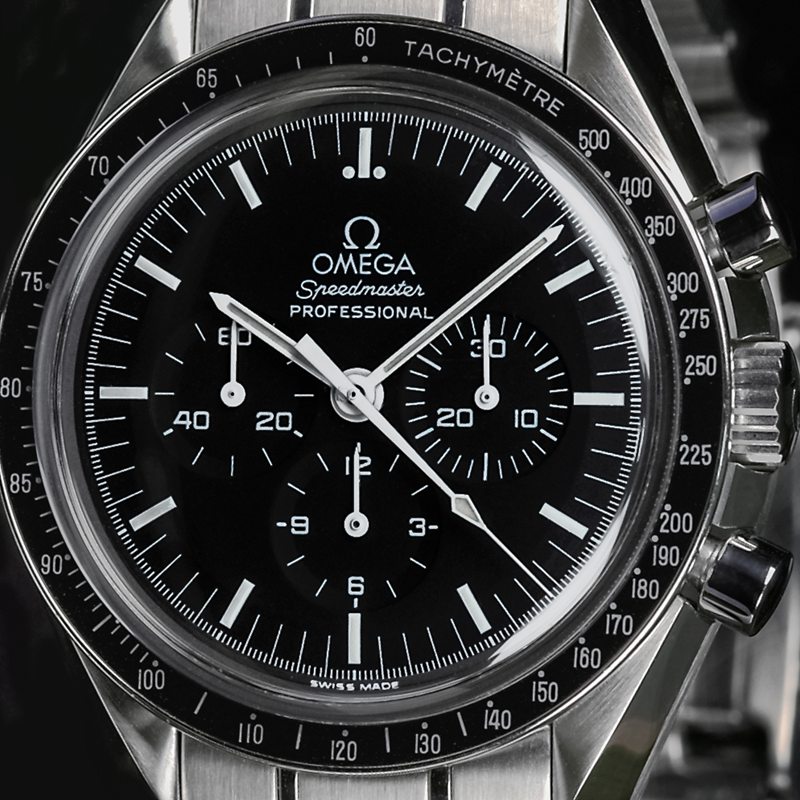
Omega Speedmaster Professional wristwatch with tachymeter bezel
01 · The Watch

The Moonwatch

In 1965, NASA strapped a handful of chronographs to a torture rig — heat, vacuum, shock, humidity — and only one came out alive: the Omega Speedmaster Professional. Four years later it was on Buzz Aldrin’s wrist on the Sea of Tranquility, and it has flown on every crewed NASA mission of the era since.

It is also, mechanically, a direct descendant of the pocket watch you just explored. Scroll on and see what six decades of refinement look like.

02 · Dial, Bezel & Hands

An Instrument, Not Just a Face

Where the Waltham’s dial was built for reading the hour, the Speedmaster’s is built for measuring. The black ring around the crystal is the tachymeter bezel: start the chronograph, drive one mile, and the number the seconds hand points at is your speed.

Baton hands and hour markers carry luminous paint for low light — an evolution of the radium dials of early aviation, in a safer modern chemistry.

03 · The Subdials

Three Small Dials, Three Jobs

The trio of registers is the chronograph’s scoreboard. At 9 o’clock, the watch’s own running seconds — the pocket watch’s sub-seconds dial, relocated. At 3 o’clock, a 30-minute counter; at 6 o’clock, a 12-hour counter, both driven only while the stopwatch runs.

The long central sweep hand belongs to the chronograph, not the time — it sits dead still until you press the button.

04 · Crown & Pushers

The Cockpit Controls

The center knob is the crown — the pocket watch’s winding stem, miniaturized. Wind it and you tighten the mainspring; pull it out a click and you set the hands.

The two buttons are the pushers: top starts and stops the chronograph, bottom snaps every counter back to zero. Inside, each press moves a whole secondary layer of levers and clutches — a stopwatch built on top of a watch.

Astronauts operated these in pressurized gloves — one reason NASA’s test demanded big, positive, mechanical controls rather than delicate ones.
05 · The Movement

Calibre 1861

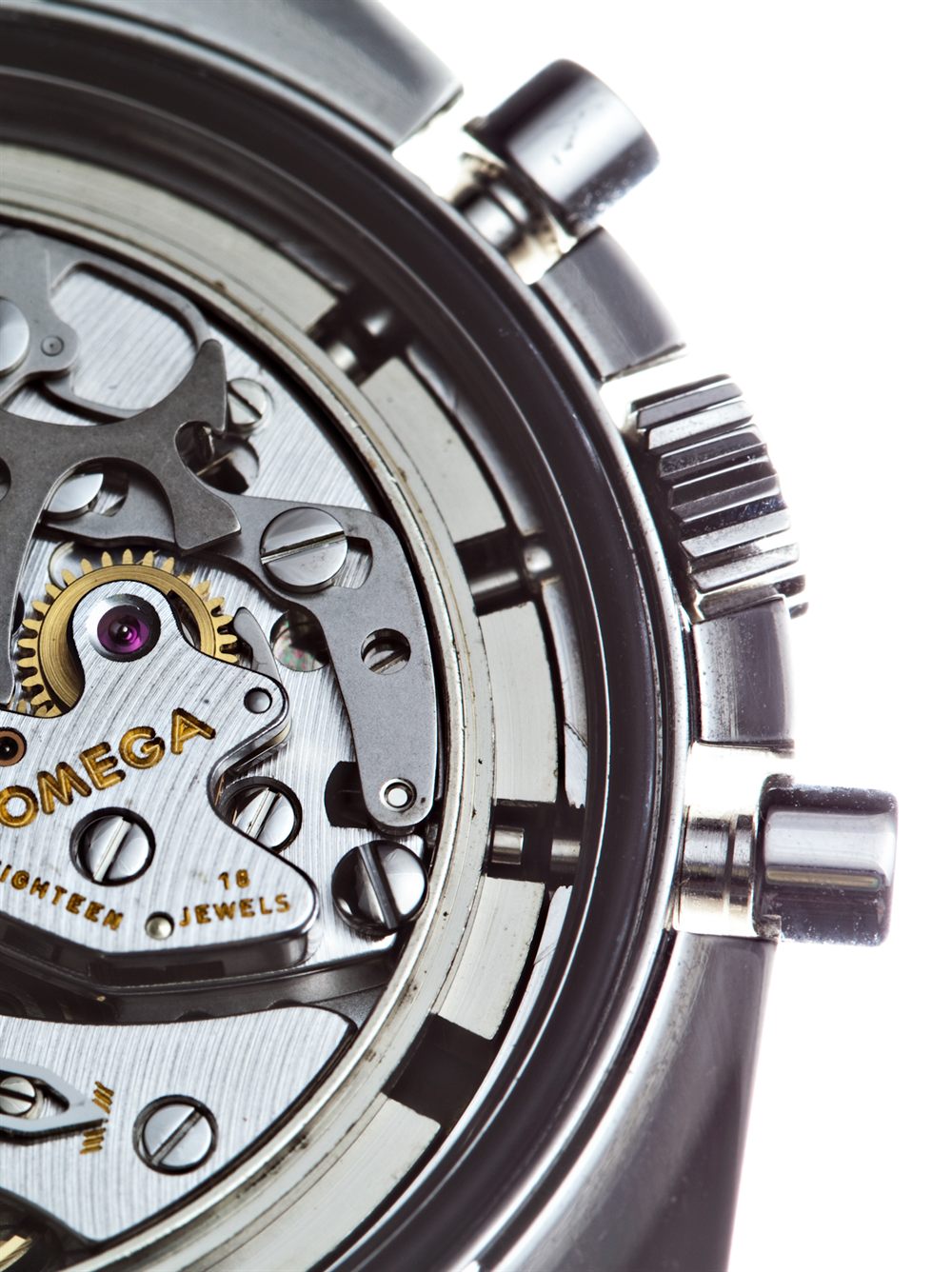
Flip the watch over and here is the engine: Omega’s hand-wound Calibre 1861, 18 jewels, beating 21,600 times per hour. No battery, no rotor — like the Waltham, it lives entirely off the mainspring you wind through the crown.

Every part you met in the pocket watch is here, shrunk and hardened: barrel, gear train, lever escapement, balance and hairspring. The extra silver-and-gold architecture on top is the chronograph works — the added machinery that makes it a stopwatch too.

06 · Balance & Escapement

The Same Beating Heart, Faster

Under the engraved bridge swings the balance wheel — identical in principle to the Waltham’s, but beating 6 times a second instead of 5. Higher frequency means each swing matters less, so a bump on the wrist disturbs the time less.

Wristwatches also added shock protection: the balance’s jewel bearings sit in sprung mounts that give way under impact instead of letting the hair-fine pivots snap. It’s why you can wear one playing tennis — and why your great-grandfather treated his pocket watch like an egg.

07 · Through the Case

The Collector’s View

Seen through an opened case: a Calibre 321, the column-wheel movement that powered the Speedmasters NASA actually flew. The dark steel levers riding over the copper plates are the chronograph layer at work — collectors prize this movement the way car people prize a numbers-matching engine.

The heavy steel ring around it is the case middle, machined to keep dust, water, and 8g launches away from all of the above.

08 · The Case Back

An Engraving Earned in Vacuum

Just as the Waltham’s case back carried a captain’s farewell, the Speedmaster’s carries its own inscription: “Flight-qualified by NASA for all manned space missions — the first watch worn on the moon.”

Two watches, seventy years apart, telling the same truth: a great timepiece isn’t just a machine. It’s a witness.

From Pocket to Wrist — What Changed

SizeA 45 mm pocket movement shrank to fit a 20 mm wrist calibre
FrequencyBeats rose from 5 to 6+ per second for steadier wear
Shock ProofingSprung jewel mounts replaced “handle with care”
ComplicationsChronographs, dates, and dive bezels joined the party
The HeartUnchanged: mainspring, train, escapement, balance

Now You Know What’s Ticking

Hold One in Your Hand

Reading about a balance wheel is one thing — feeling a 100-year-old watch tick in your palm is another. Every piece in our collection is authenticated, serviced, and ready for its next chapter.

Photo Credits

All photographs are real and unretouched apart from cropping, via Wikimedia Commons: Waltham dial by Joe Haupt (CC BY-SA 2.0) · Waltham Vanguard movement, gears & escapement from Waltham-1907-Vanguard-movement (CC BY-SA 4.0) · Balance wheel by Chris Burks (public domain) · Mainspring & jewels photos by Hustvedt (CC BY-SA 3.0) · 1933 presentation case back by Naval History & Heritage Command (CC BY 2.0) · Speedmaster front & dial by Torsten Bolten (public domain) · Omega Cal. 1861 & Cal. 321 movement and crown photos by Shane Lin (CC BY-SA 2.0) · Speedmaster case back by MadGeographer (CC BY-SA 3.0). Watches shown are reference pieces for education, not current inventory.